
The world is their studio
By Jakob Miller, Division of the Arts
From Greece to New York and beyond, UW–Madison students discover new ways to learn about the arts outside the classroom.

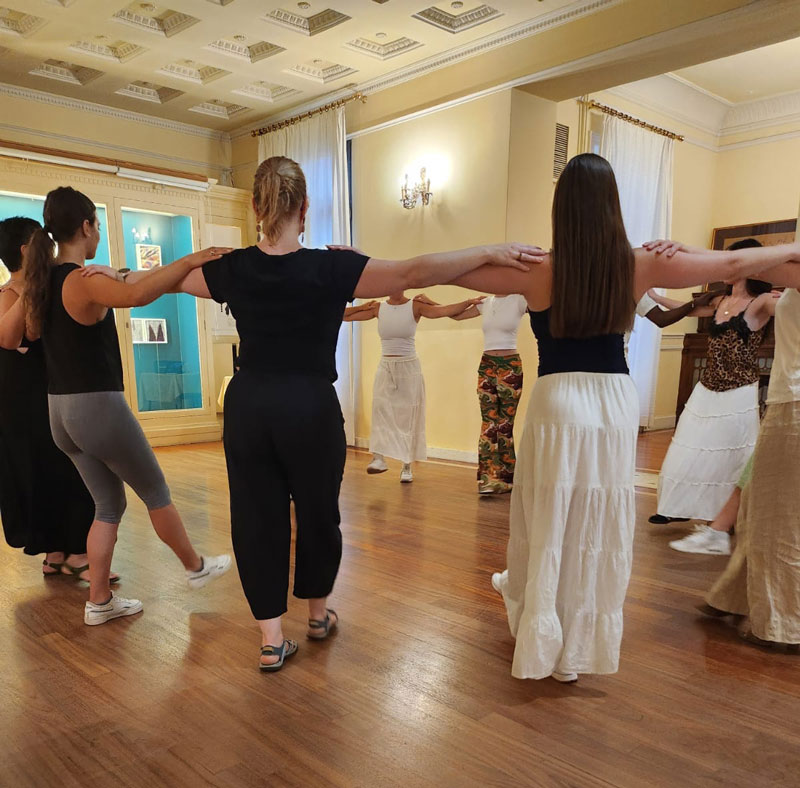
At the Akropoditi Dance Festival on the Greek island of Syros, UW–Madison student Dara Zahorik stepped into a dance studio surrounded by people from around the world. Many of the dancers did not speak English as their first language. But as they practiced movements together, Zahorik found herself understanding anyway, learning alongside people she might not have otherwise been able to communicate with. “It’s a different way of thinking about moving,” she says.
Zahorik, now a senior studying dance and educational policy studies, participated in the Dancing Cultures in Greece program as a freshman. The trip introduced her to new approaches to contemporary dance and gave her a chance to work with artists from around the world.
UW–Madison offers more than 300 study abroad and study away opportunities spanning over 80 countries. According to a 2025 report, more than 3,000 UW–Madison students study abroad each year, ranking the university sixth in the nation for participation. But learning beyond campus doesn’t always mean spending a semester overseas. For students interested in the arts, opportunities span a variety of disciplines and geographies, from theater in London and drawing in Portugal to dance and fashion education in New York City. Programs also vary in length, ranging from just a few weeks to an entire academic year.
Identity and connection through the arts

Natalie Zervou, an associate professor in the Dance Department who teaches the Dancing Cultures in Greece program, believes that being physically present in another culture offers lessons that cannot be replicated in Madison. “We’re looking a lot at how dance connects to a sense of identity,” she explains.
The program explores the relationship between dance, cultural expression, and national identity through workshops, museum visits, guest lectures, and live performances. After an online orientation, Zervou takes students outside of the traditional classroom for two weeks of immersive learning. Students spend much of their time in Athens before traveling to Syros to participate in the Akropoditi Dance Festival. They attend workshops led by international artists, experience contemporary dance performances, and observe how movement connects people across cultures.
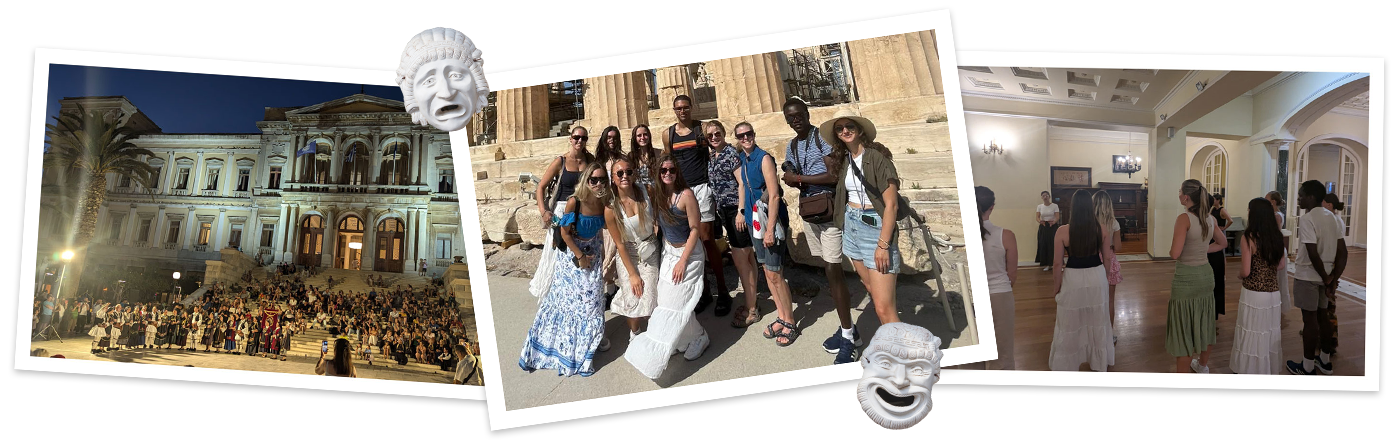
“You do not have to be a dancer to be successful in this course,” says Zervou, emphasizing that previous experience is not required. Zervou notes that students from different academic backgrounds can participate and develop their own understanding of cultural expression. She has seen students become more confident during the program, including one participant who started the trip reserved but grew increasingly comfortable engaging with the group.
Zahorik experienced similar growth. She returned to Madison with a broader understanding of contemporary dance, increased confidence in partnering techniques, and stronger relationships with faculty and fellow students. The opportunity to experience these performances firsthand was one of the most valuable aspects of the trip. “A lot of our learning was going to see dance performances, which couldn’t have been done if we were in any other setting,” she says.
‘Study-abroad,’ but stateside
Students interested in fashion design can find a different kind of off–campus experience in New York City.
Through UW–Madison’s School of Human Ecology, students majoring in textiles and fashion design can apply to spend their final year at the Fashion Institute of Technology (FIT) in New York City.

The partnership — which is celebrating its 40th anniversary — allows students to pursue specialized coursework in one of seven areas. Upon completion, students earn a bachelor’s degree from UW–Madison and an associate degree from FIT.
Cole Bielby, an academic advisor in the School of Human Ecology and UW–Madison’s FIT coordinator, says the program provides opportunities that students might not have in Madison. “The experience of being in and connecting to New York City is a really special opportunity,” Bielby says.
UW–Madison emphasizes creative thinking and hands–on design, but FIT offers specialized technical training and industry-focused coursework. Students interested in the business side of fashion can also explore areas such as marketing and product development.
Being in New York City also creates opportunities for professional development, including internships and connections with industry professionals. “It really gives students the chance to kind of plant roots in New York,” Bielby says.
However, the experience also presents challenges. Bielby says students often describe the transition from Madison to Manhattan as a significant cultural adjustment. Fashion design students can spend long days in studios and classrooms, leaving less time to explore the city than they might expect.
Despite the demanding coursework, Bielby says the experience can be particularly valuable for students hoping to pursue careers in the fashion industry after graduation.
“Fashion is a really difficult career field to get into at times,” Bielby says. “The ability to just have something on the resume or have a portfolio that you get to show with a lot of work through that really intensive year-long program is something really special.”
So many off-campus opportunities
While Greece and FIT offer two distinct experiences, they are just part of the larger range of arts programs available to UW–Madison students. Through UW Theatre in London, students can experience Britain’s theatrical traditions while attending productions and exploring the culture. In Portugal, the City as Studio: Drawing in Portugal program invites students to use cities such as Porto and Lisbon to develop their artistic practice through drawing on location.
Students can also explore opportunities closer to home. In summer 2026, five UW–Madison dance students participated in a three–week Dance Education Laboratory program at New York City’s 92nd Street Y, strengthening their skills and connecting with dance educators from across the country.
For Zahorik, the Greece program remains a memorable part of her time at UW–Madison. She says she would still recommend it to other students: “I would go on the program again if I could.”
Jakob Miller is a student writer for UW–Madison Division of the Arts.