Reframing the influence of Japanese prints on Frank Lloyd Wright
By Maggie Ginsberg, Division of the Arts
Chazen fabricators built a replica of Wright’s custom standing frame to showcase the unique connection with one of the museum’s strongest collections.
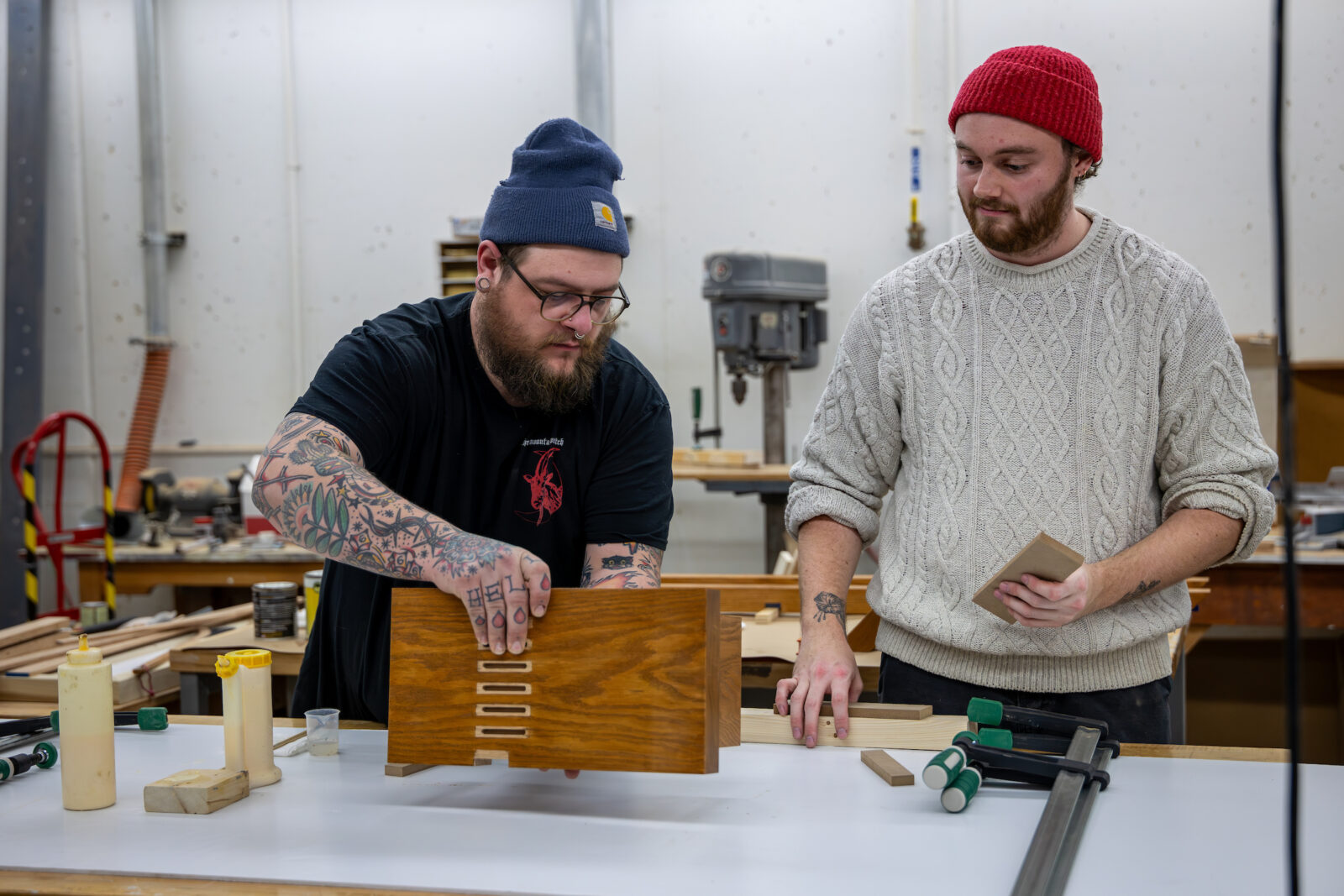
Down in the brightly lit basement workshop of the Chazen Museum of Art last fall, two fabricators set up a time-lapse camera to capture three weeks of a very special custom build. Chazen’s small but mighty preparatory staff is regularly tasked with making things like pedestals and plinths for galleries and exhibitions, but these components are typically “invisible” to museum visitors.
“That’s the point, it’s better if it’s invisible,” says Sam Northcut, who is shown on the time-lapse video with former Chazen fabricator Rosco Ford working together at warp speed. “It lets the art shine.”
But this time, the shine was on the build, because the build was also art: a museum-quality replica of a wooden frame designed and built by famed architect Frank Lloyd Wright. It was destined for newly reinstalled Gallery 3a, where it would hold even more art, framing Japanese prints once owned by Wright himself.
“It was the first project I was assigned for the Chazen’s reinstallation, and it was one of the main reasons I was hired,” says Northcut, who earned his MFA through UW’s art department with an emphasis on woodworking.
Wright, on the other hand, was not a professional woodworker. But he had personally made several such frames in his signature style to exhibit his sprawling personal collection of Japanese color woodblock prints. He bought, sold, and gifted to clients—and, unfortunately, lost to the bank—literally thousands of Japanese prints during his lifetime. He also used them to teach his design principles because he found so much synergy with Japanese art. In Wright’s own words, he was “obsessed.”
“Ever since I discovered the print, Japan had appealed to me as the most romantic, artistic, nature-inspired country on Earth,” Wright wrote in his 1932 autobiography. “If Japanese prints were to be deducted from my education, I don’t know what direction the whole might have taken.”
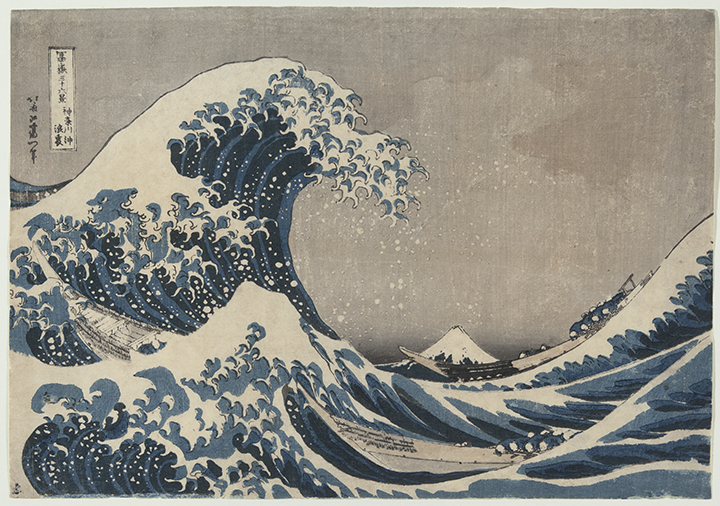
Wright amassed enough valuable works to use them as collateral to build Taliesin. But in 1926, the Bank of Wisconsin called Wright’s loan and took possession of nearly five thousand prints estimated at $40,000. Two years later, UW math professor Edward Burr Van Vleck—also a major Japanese art collector—scooped up more than four thousand of the prints for less than $1 a piece. In the 1980s, the Van Vleck family bequeathed the collection to the Chazen (along with an endowment to help it grow), and today the E. B. Van Vleck Collection is among the largest collections of Japanese color woodblock prints in the country. Chazen visitors may not even realize that most of them once belonged to Wright, including The Great Wave by Katsushika Hokusai, one of the most recognizable art images in the world.
Even James Wehn, Chazen’s Van Vleck Curator of Works on Paper, didn’t know about Wright’s passion before he came to Madison.
“I first learned about Frank Lloyd Wright’s interest in Japanese prints when I came here in 2019,” says Wehn. He was curious why the Chazen’s holdings were so strong—for example, the museum has 2,200 works by Japanese printmaker Utagawa Hiroshige alone, more than any other artist in the Chazen’s entire 25,000-object collection. Wehn soon learned not only the colorful story behind Van Vleck’s acquisition, but also of Wright’s custom frames.
“I found this book by Julia Meech,” Wehn says, pulling Frank Lloyd Wright and the Art of Japan: The Architect’s Other Passion from his stuffed bookshelf and opening to a photo of a standing frame. “From the moment I saw this, I thought it would be so cool to acquire one for the Chazen’s collection. But they’re very scarce. I’ve never seen one come up at auction.”
Wehn filed the thought away.
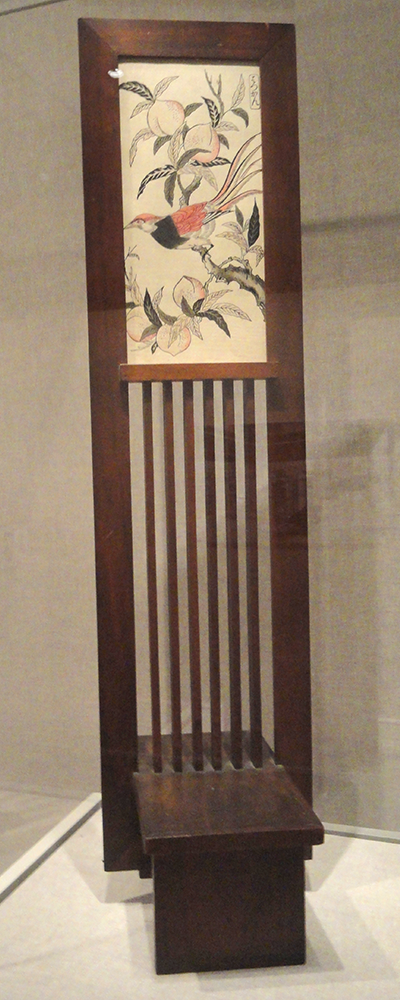
Four years later, the Chazen embarked on its massive reinstallation project that reorganized the collection into galleries anchored by a focus object surrounded by thematically connected constellation objects. Wehn was helping former curator Janine Yorimoto Boldt develop Gallery 3a, which ties together Louis Sullivan’s steel elevator grille focus object with elements of Prairie School architecture and the Arts and Crafts movement—that’s when he remembered the frames. How perfect would it be if this gallery could showcase Japanese prints, once owned by Wright, in a frame designed and built by Wright?
There was just one problem.
“Even if we had found an actual, original, Frank Lloyd Wright-designed and custom-made frame for Japanese prints, we could not have put our works into it,” Wehn says. Works on paper are fragile, sensitive to light and chemicals, and require an extra level of care. They must rotate out every six months and “rest” off view for as long as possible to extend their lifespan for future generations. Wright had been a passionate collector, not a trained curator—he essentially tacked his prints straight onto the wooden frames, which were also not exactly archival quality.
But what if the Chazen got permission to construct a replica that met museum standards?
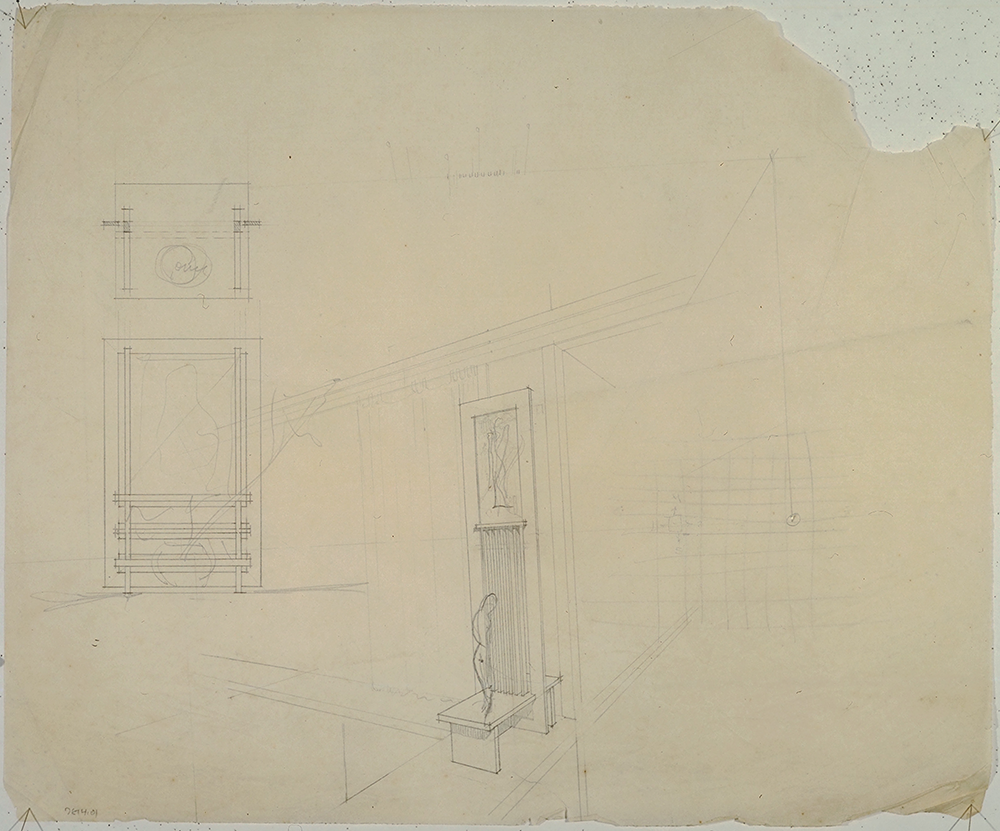
Boldt reached out to both the Frank Lloyd Wright Foundation and Taliesin Preservation, and the team took a research trip to Spring Green. There they were granted the necessary permissions and some resource materials, including an original sketch by Wright.
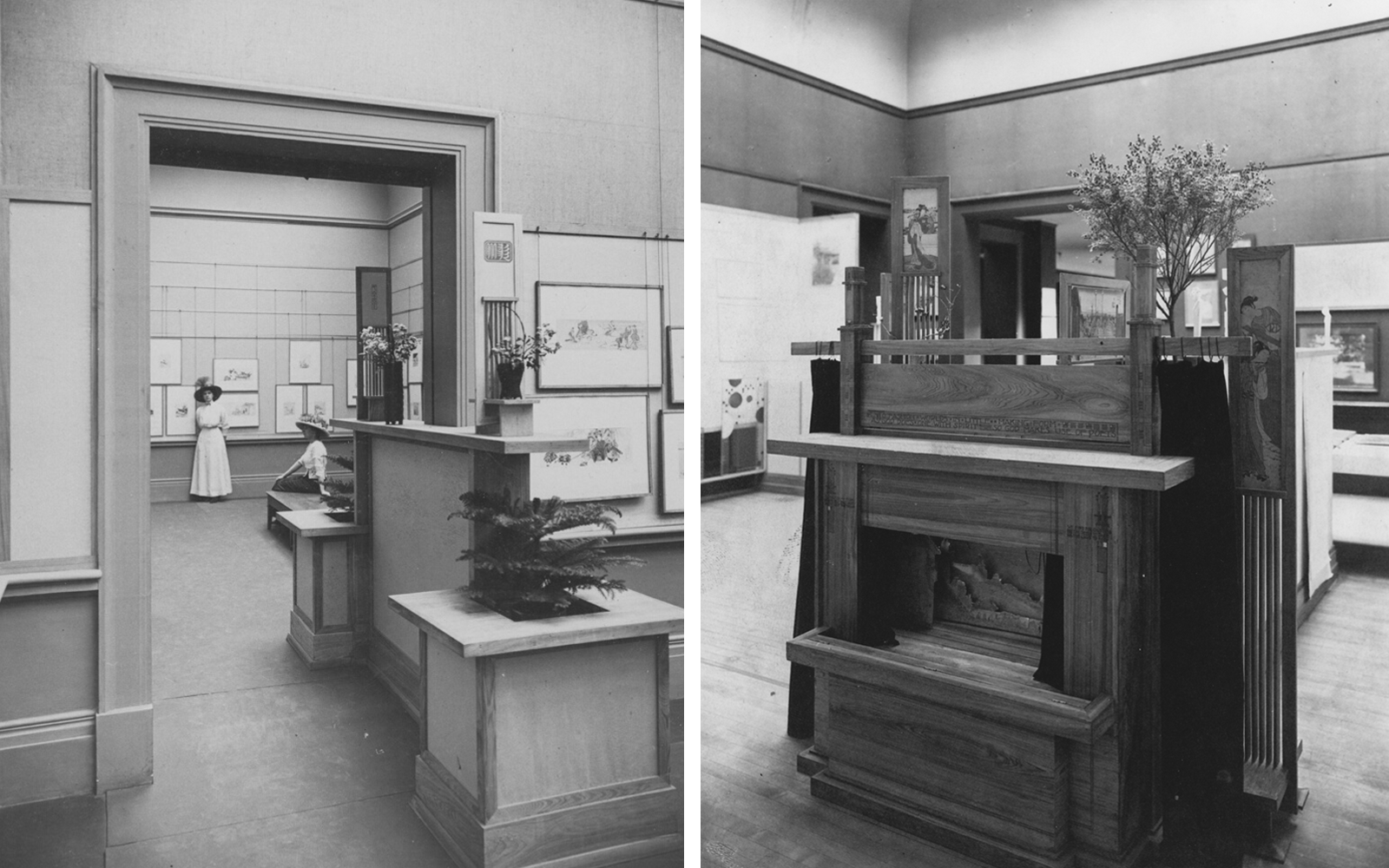
Back at the Chazen, Boldt and Wehn studied articles and photographs from early 1900s exhibitions at the Art Institute of Chicago that offered glimpses of Wright’s frames. Then they handed the baton to the fabricators, who got to work.
“I was super excited about this project,” says Northcut. “I feel like I’ve been able to learn a lot and flex my skills as a maker.”
Trying to stay as true as possible to the spirit of Wright’s frame, they sourced red oak from a local lumber supply, and tested nine different finishes, holding sample blocks up to the surrounding artwork before settling on a shade called “pecan.” Northcut used 3D modeling software to make a detailed plan that included joinery (most of which Ford executed), and added museum-quality modifications, like protective “glazing” and a mounted matte system, to properly support a rotating selection of thirteen Japanese pillar prints. Much of the three-week build was spent milling down the wood and letting it acclimate to the climate, plus letting the glue set beneath giant clamps.
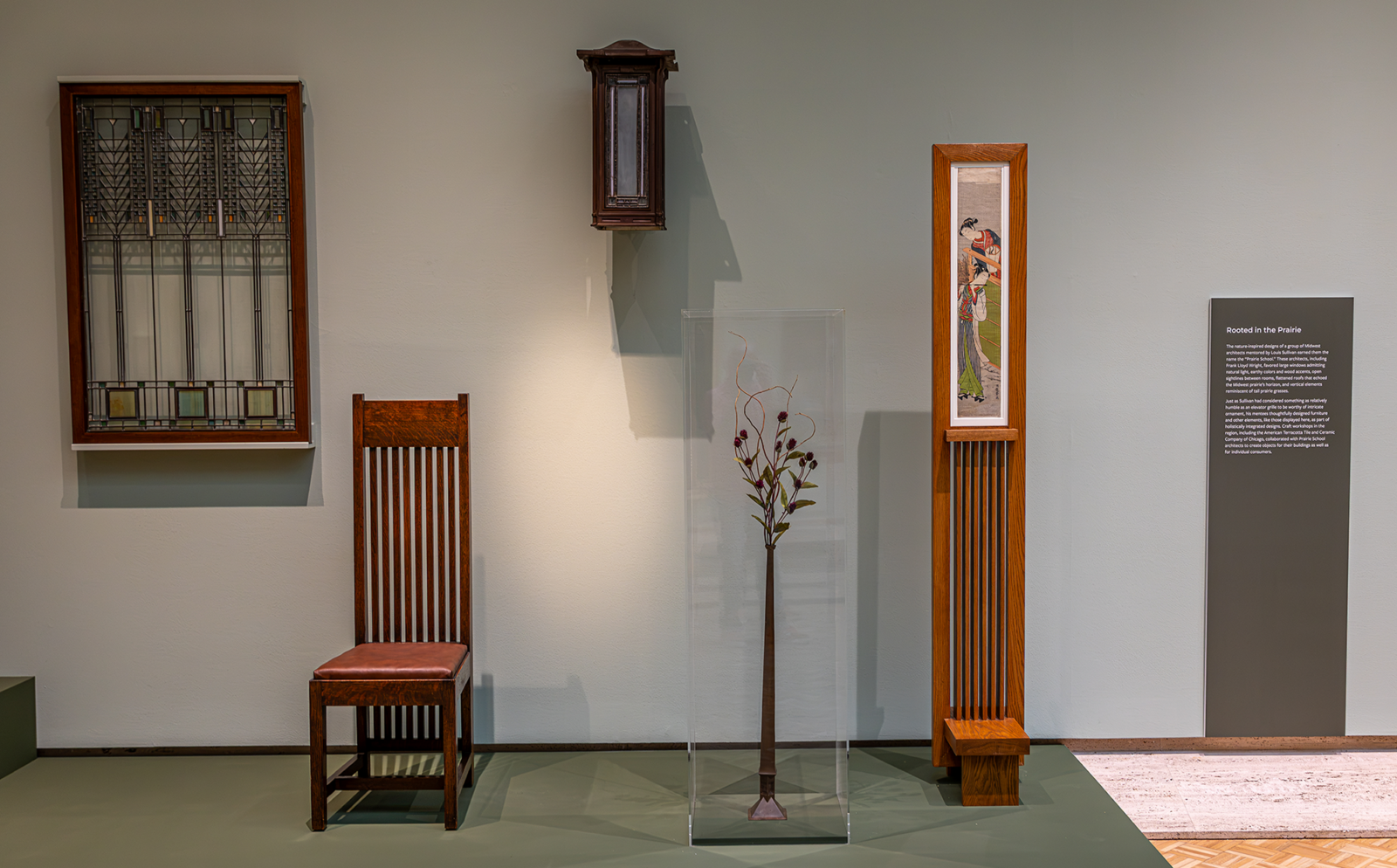
“Working with Rosco on this was a delight,” Northcut says, “and a good introduction to this shop, to understanding the flow before it got a little bit more chaotic.”
That “chaos,” of course, would come over the next year as the four-person preparatory team, led by Kate Wanberg and aided by a handful of graduate student workers, built hundreds of custom pieces for the newly designed galleries.
“I would say seventy-five percent of the stuff you’re seeing is new,” Northcut says about the platforms and other fabricated elements now both supporting and enhancing the artwork. This includes the more complex, curved elements, which he created using the art department’s CNC routing machine.
“I think when people come to the museum, they’ll feel the work,” he says. “They might not see it, but they’ll know that this was a huge undertaking, and that it’s changed so much. It’s really exciting.”