Why Wisconsin? Student Edition
By Julia Walkowicz, Division of the Arts
In a special student-focused installment of our Why Wisconsin? arts series, we asked four Badgers to tell us what drew them to UW–Madison and why they’ve stayed.
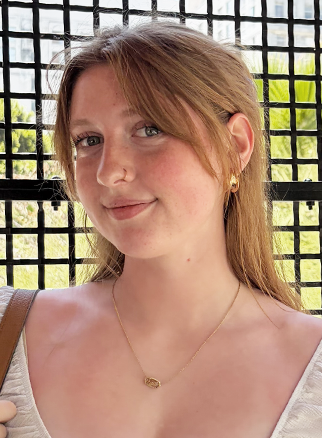
Amari Priya Kukreja
Sophomore, majoring in violin performance
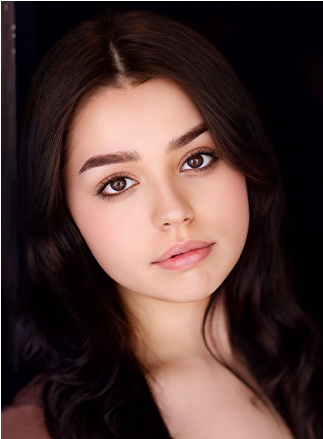
When Amari Priya Kukreja was looking for a university, she worried she’d be forced to focus on just one of her artistic pursuits.
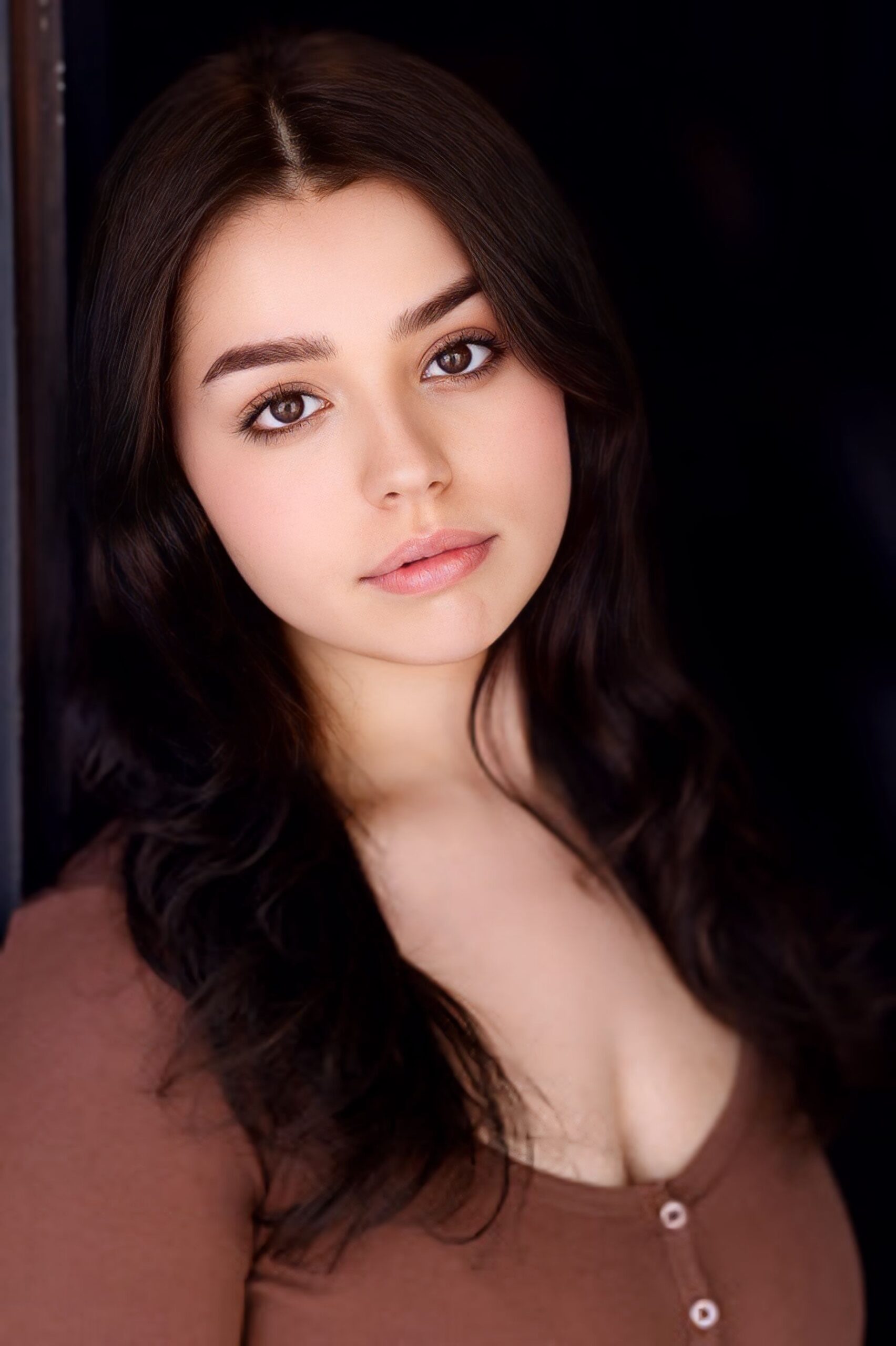
“I didn’t want to enter college feeling like I had to leave parts of myself behind in order to be taken seriously in one discipline,” says Kukreja, who has studied classical violin performance for 13 years, creates visual art and writes and performs R&B music. “That was a major part of why Wisconsin became the right choice for me. I realized I didn’t necessarily have to choose one artistic identity — I could allow all of them to inform each other.”
As a violin performance major in the Mead Witter School of Music, Kukreja participates in various symphony, chamber and ensemble groups. She is a member of the First Wave Hip Hop & Urban Arts Scholarship Program and lived her first year in Sellery Hall’s The Studio Creative Arts Learning Community. This spring, Kukreja even released her debut single, “Begging You.”
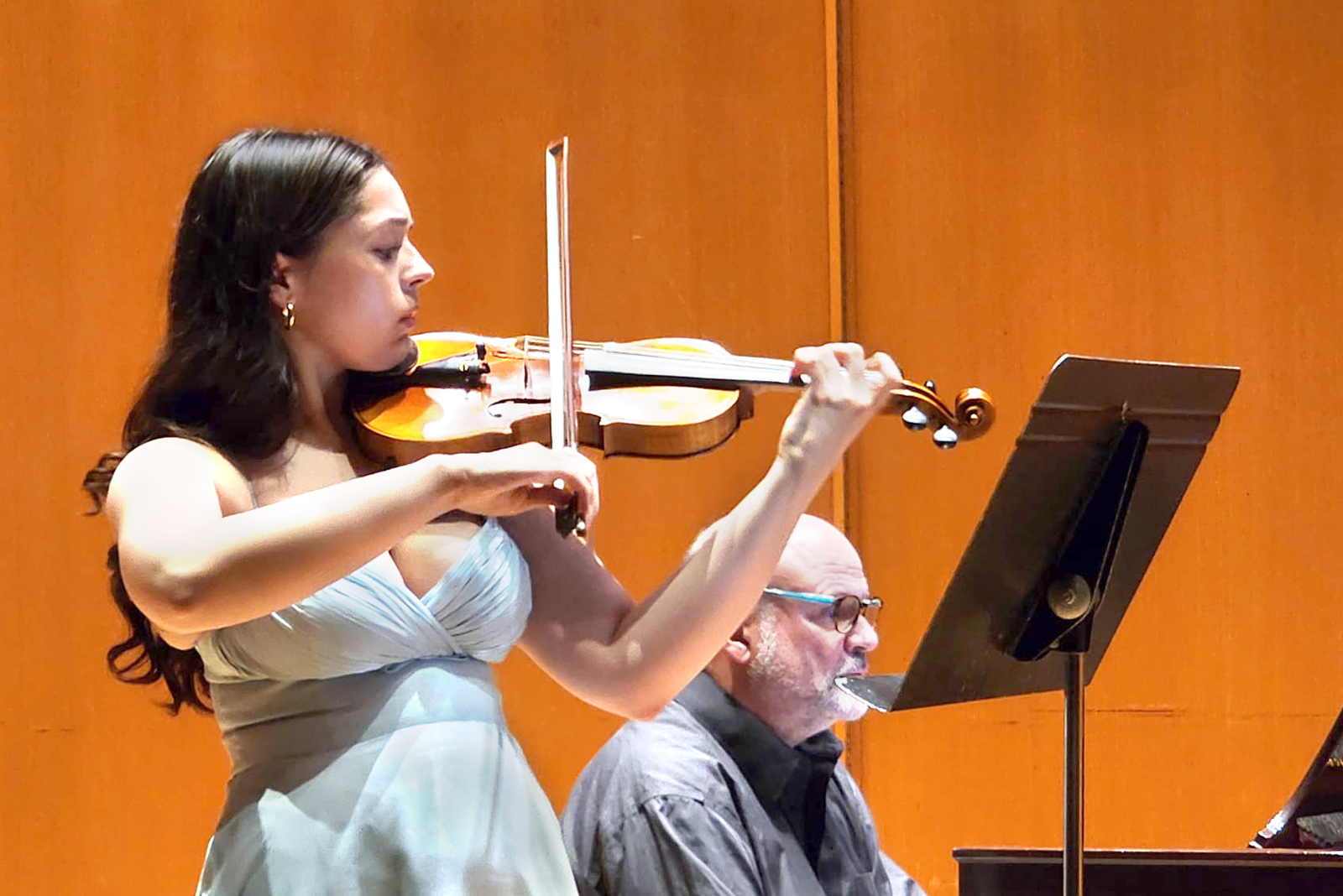
“The Studio has encouraged me to take ideas that might have stayed in my head and actually turn them into projects,” says Kukreja, who received a Creative Arts Award for her mural project, Women’s Bodies, Witnessed. “You’re living alongside people who are constantly creating, experimenting, performing, and thinking about how they want to contribute to the world.”
First Wave also offered the interdisciplinary artistic community she craved.
“I didn’t have to explain why I wanted to be both a classical musician and an R&B artist, or why visual art, activism, and storytelling mattered to me. Those things were understood as connected,” Kukreja says. “Being surrounded by artists who approach their work differently has taught me just as much about collaboration and creative practice as formal instruction has.”
Now in her second year, Kukreja remains grateful that UW–Madison allowed her to explore all parts of her artistic identity — without boundaries.
“One of the biggest things I’ve learned is that these disciplines don’t actually feel separate to me,” says Kukreja. “I’d love for my future work to make those connections more visible.”
Richard William Ellis
Ph.D. student, Department of Art History
Academic Engagement Project Assistant at the Chazen Museum of Art
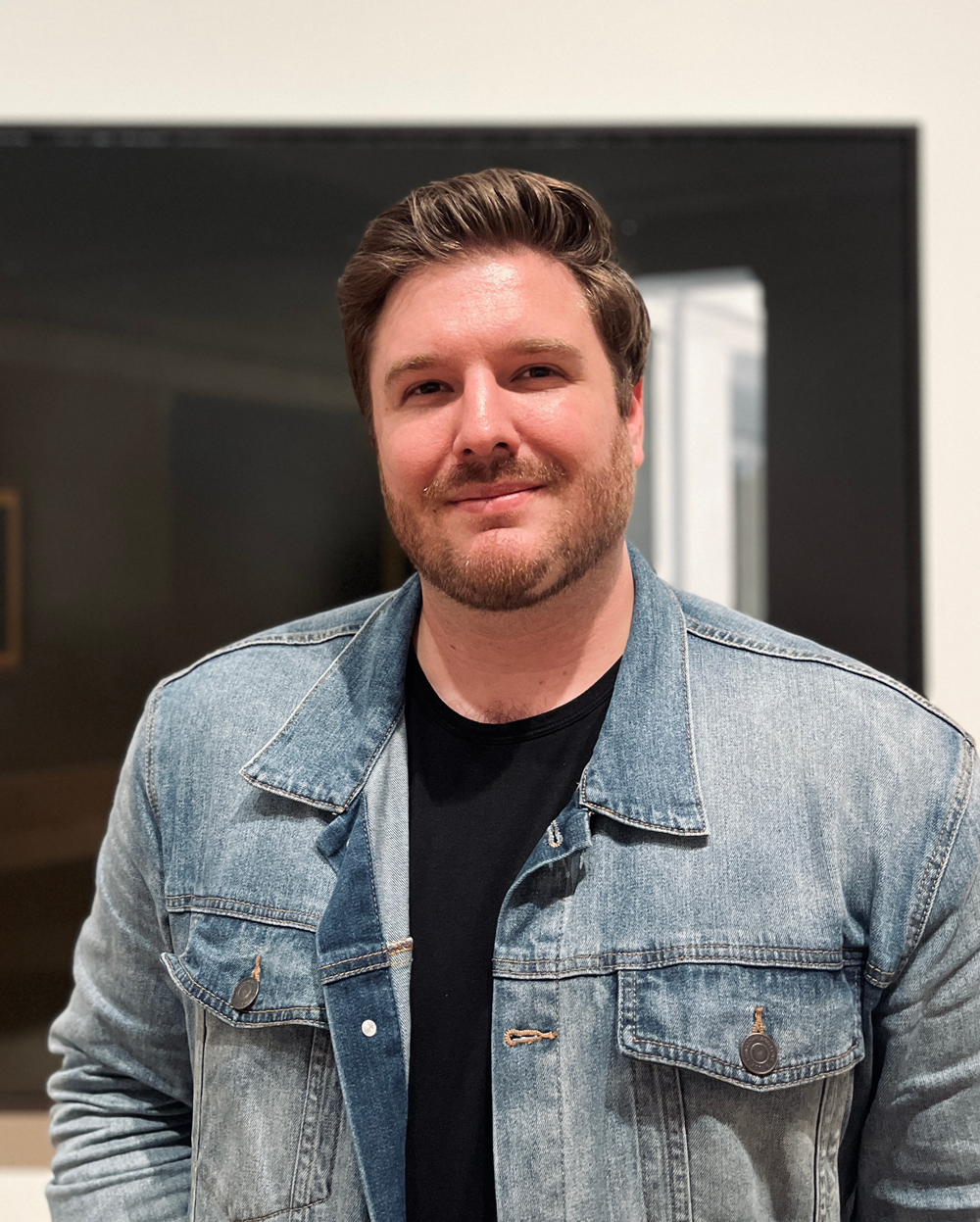
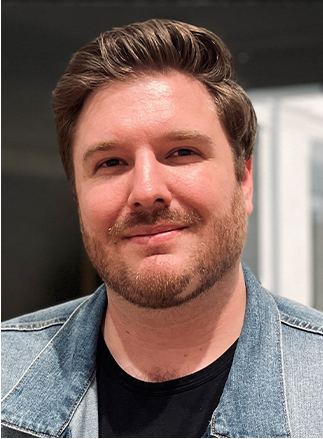
After Richard William Ellis attended the Dept. of Art History’s prospective graduate student open house in 2024, his choice became clear.
“I was won over by the [Art History] faculty, staff, and current graduate students, as well as by the Chazen Museum of Art and the Kohler Art Library, both of which have excellent collections for study and practice,” Ellis says.
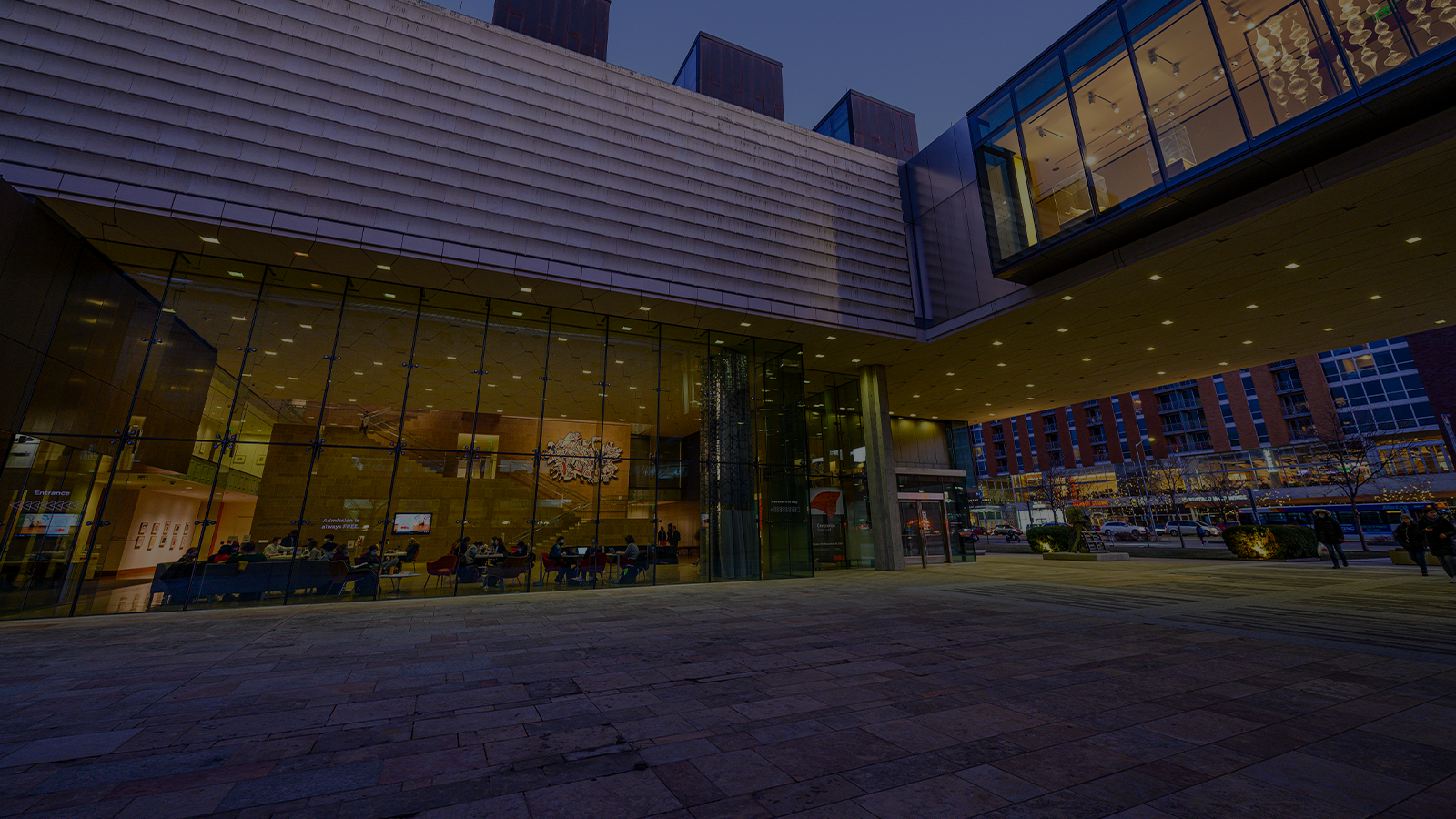
Today the third-year Art History PhD candidate works with students at the Chazen. Up until the museum temporarily closed this summer to reinstall the collection, Ellis drafted educational materials, led gallery tours and facilitated visits to the print study room — all of which will be enhanced as the redesigned Chazen reopens.
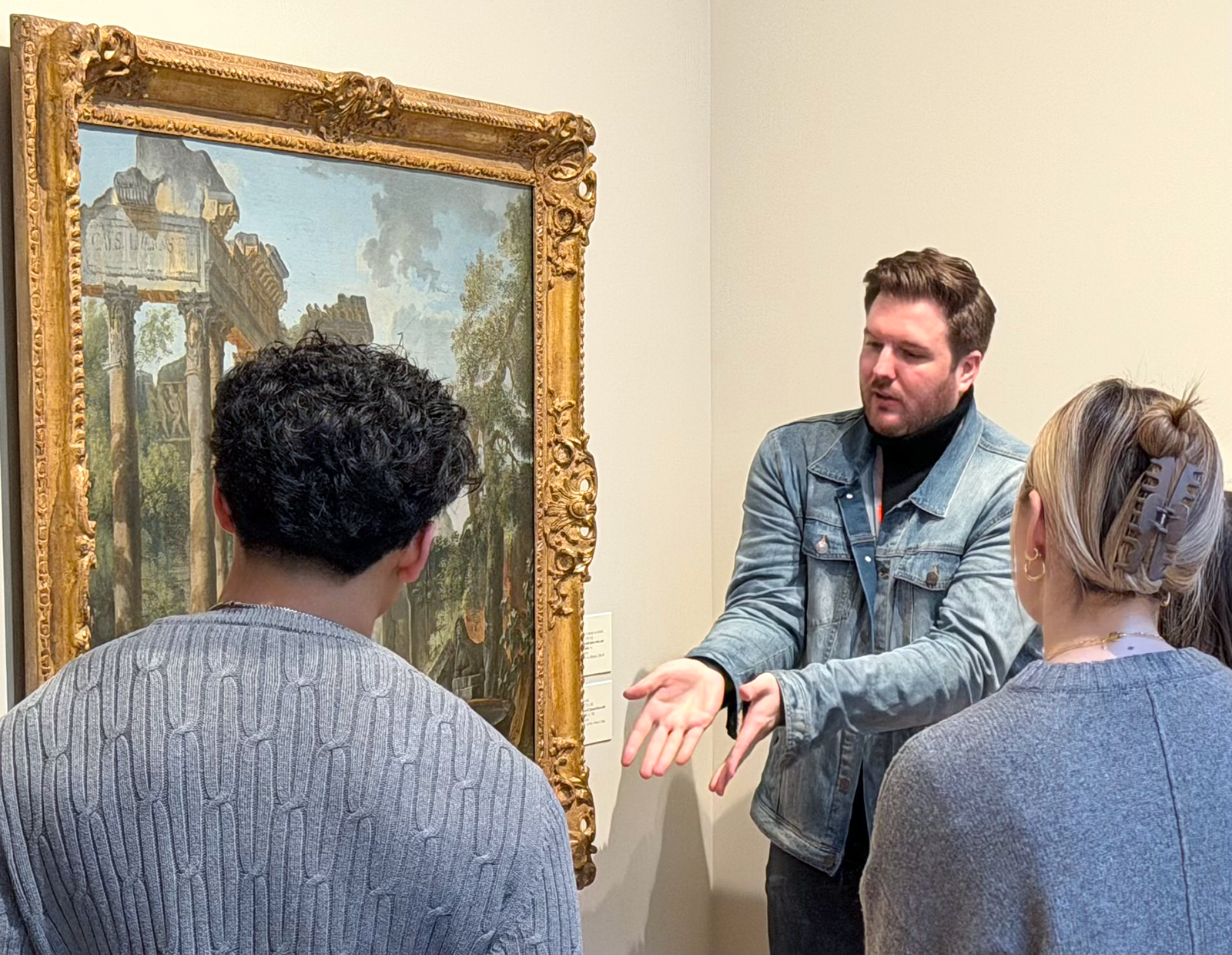
“Collaborating with instructors from across various departments and participating in their students’ learning experiences has been such an awesome gift that connects me to the broader UW–Madison community,” says Ellis. “To continue doing the work I love — but with the entire museum fully open and refreshed — is something I am extremely excited about.”
He says that a hidden gem of the Dept. of Art History is the variety of online summer courses taught by passionate graduate students. These classes are exclusively available to undergraduate students to satisfy a range of required credits, minors and certificates. Instructors design their own courses at this level, focusing on topics in Art History that truly matter to students as they consider the future.
“People are reaching back into the past to ask questions and solve problems that are critical to our time, which I think is a very powerful thing,” Ellis says. “Students today are increasingly interested in using art to explore topics like social justice and ecocriticism, and professors have been responding to this growing demand.”
Corey Wellik
Graduate student, Master of Fine Arts in woodworking
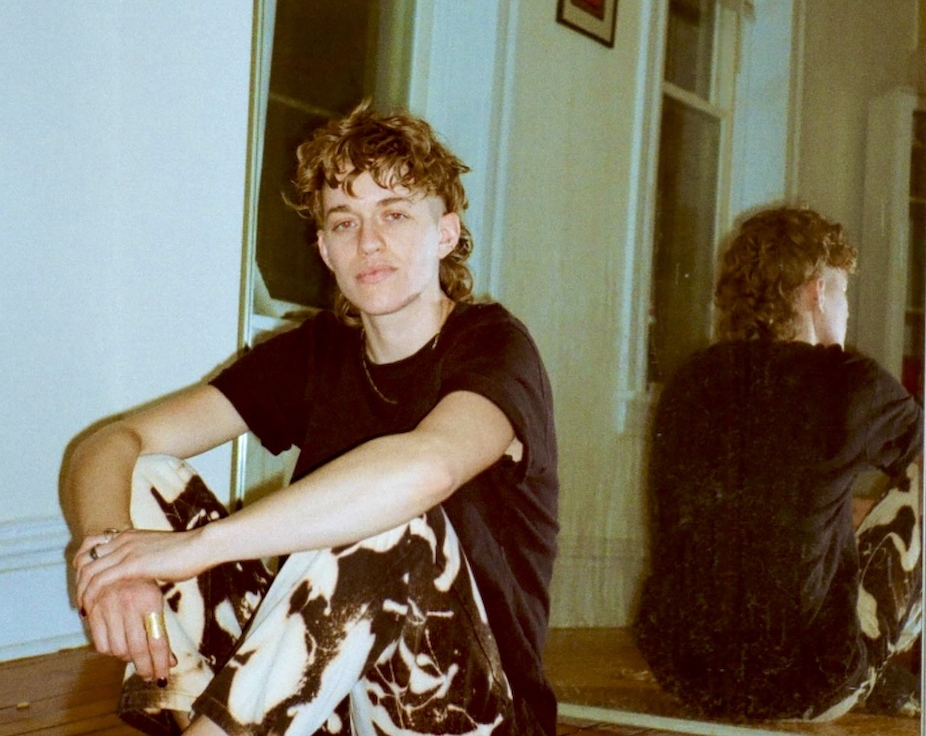
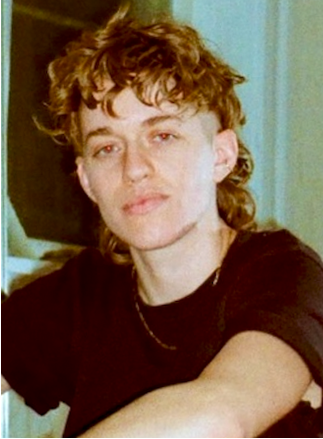
Corey Wellik is carving many paths. The third-year Master of Fine Arts in Woodworking student was first drawn to the UW–Madison Art Department by the fully-funded program, which balances focused study with interdisciplinary exploration.
“I wanted to pursue woodworking in a more intensive and rigorous way, and UW uniquely offers an MFA specifically in wood,” says Wellik. “I’ve discovered realms of my art practice I wouldn’t have otherwise, [plus] access to incredible studio spaces, talented art faculty, equipment and facilities.”
In their final year, Wellik is excited to combine the mediums of ceramics and wood into elaborate pieces while exploring seminars, history and theory classes — within and outside of their MFA program.
“I am encouraged to take an incredible array of studio courses such as neon sculpture, comics and figurative ceramics,” says Wellik. “The breadth of artistic expertise and resourced learning here is astounding.”
Wellik relishes the chance to work with woodworking faculty advisor Katie Hudnall, whose talent and generosity also drew them to the program, and esteemed artists outside the program, like UW Art Department’s legendary cartoonist Lynda Barry.
Wellik also gets to teach — Art 100 for five semesters — giving undergraduates the opportunity to learn what Wellik has: that art adds meaning and purpose regardless of your specific area of study.
“More people should be taking art classes, because it teaches you things you wouldn’t expect to learn about yourself and your creative process that could be applied in any field,” Wellik says. “My students who are engineers or English majors, who call themselves ‘terrible artists,’ create some of the most awesome work I’ve received as a teacher.”
Bree Elisabeth Scholl
Sophomore, Majoring in art with certificates in entrepreneurship and textiles and fashion design
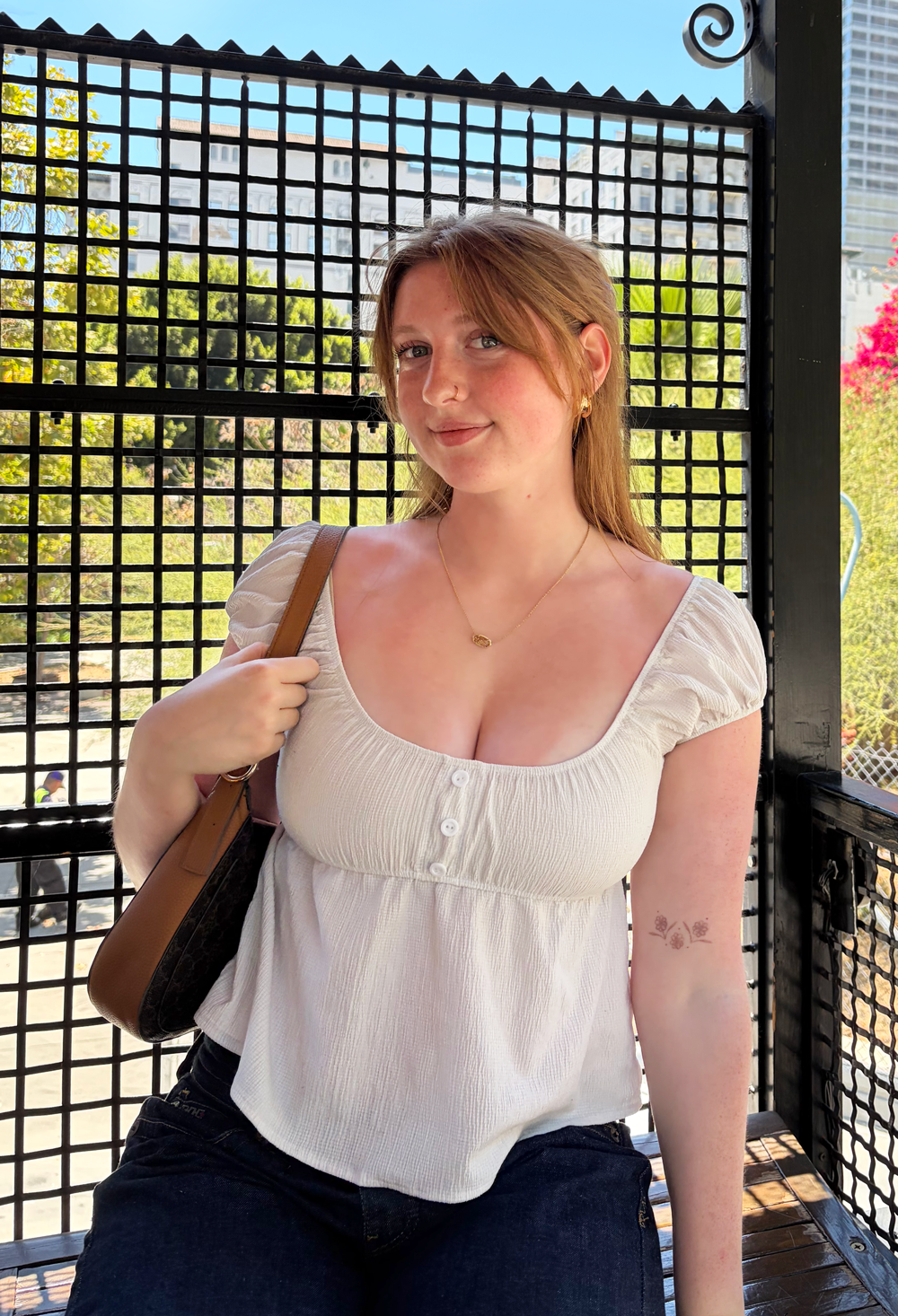
For La Crosse-native Bree Elisabeth Scholl, Madison’s natural scenery helped her feel at home.
“Where I’m from there is so much nature and wildlife. I immediately fell in love with how much nature was incorporated into campus,” Scholl says. “A big connector for me was Lake Mendota and Lakeshore Path because it was the perfect mix of water and forest.”
Scholl is majoring in art, and was drawn to UW’s No.1-ranked printmaking program. She is also pursuing certificates in entrepreneurship and textiles and design, and brought some experience to campus: As a senior in high school, she illustrated a children’s book by author Jolene Goodman called “The Big Barn Dance.”
“It was such a cool and unique experience for me and taught me so much about bouncing ideas with peers, taking feedback, and creating a connection with people you’re working with,” Scholl says.
Scholl found both friends and creative collaborators on campus after she, like most art majors, was encouraged to enroll in the Art and Artists First-Year Interest Group (FIG) learning community.
“Having the same twentyish students in every class made the transition to a huge campus so much easier, “ Scholl says. “You can have lunch with the same people almost every day and it helps you build those connections 10 times faster. I would recommend everyone, no matter if you’re in art or not, to do a FIG.”
For Scholl, opportunities to experience art and creativity expand far outside the walls of a classroom.
“The arts are all over Madison. There are house shows, live music venues, murals in public spaces, people sketching in parks, and so much more,” Scholl says. “You don’t have to be an art major to enjoy the arts at UW–Madison.”
Julia Walkowicz is a student writer for UW–Madison Division of the Arts.